Your Kids, Their Space: A Family Wildlife Primer for Redondo Country
At a ranch in Redondo country, wildlife is not an attraction you drive to see. It is the neighborhood. Moose browse the willows beyond the fence line, deer clip through the meadow at first light, and an eagle can turn an ordinary breakfast into a story your kids retell for years. The trick is enjoying those moments without turning them into a stress test.
This guide is built for families who want confidence, not fear. It covers the animals you are most likely to meet around Redondo, how to keep a respectful distance, and how to make a sighting feel like a lesson in being a good guest.
Start With Space, Not Fear
The single most useful habit for a family in Montana is simple: give animals room. A good starting point is at least 25 yards from moose and deer, and 100 yards from bears and wolves. For nests, dens, and newborn animals, keep even more space. If an animal looks up, changes course, or stops eating because of you, you are already too close.
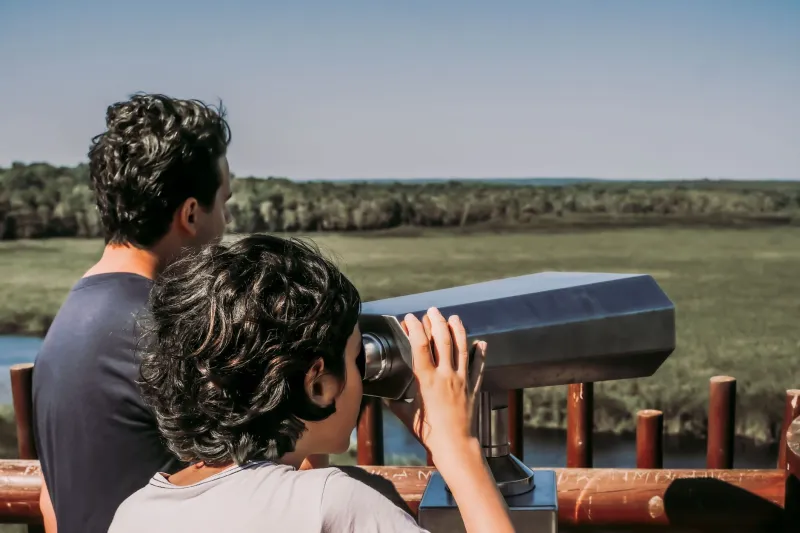
For kids, make the rule concrete. "Eyes, not hands" is a phrase even a five-year-old can remember. Use binoculars, a spotting scope, or the zoom on a phone instead of stepping closer. Quiet voices and slow movements keep the encounter calm. Running, chasing, and coaxing animals with food are never part of the plan.
The Big-Shouldered Neighbor: Moose
Moose are the animal most likely to surprise visitors. They look slow and shaggy, but they can move faster than you expect, and a cow with a calf or a bull in the fall deserves extra room. If a moose is on the trail, back away slowly and put a tree, a vehicle, or a building between you and the animal. Do not try to sneak past.
Spring and early summer are calf season, so give cows with young a wide berth. In the fall, bull moose are focused on the rut and can be less predictable. In winter, they are conserving energy and should not be pushed or followed. The best moose sightings are the ones where the animal never lifts its head because you were never close enough to matter.
Deer, Coyotes, and the Everyday Wild
Deer are the most common large animals families will see around Redondo. They are also the easiest to accidentally crowd. Watch from the porch or the trail, keep pets leashed, and never feed them. A deer that loses its fear of people is a deer that causes problems later.
Coyotes are common but rarely a threat to people. Keep small children close, keep dogs on a leash, and secure food and trash. If a coyote lingers or follows, pick up small kids, make noise, and back away—do not run. Most coyotes want nothing to do with a loud, confident family.
Eagles and other raptors are best watched with binoculars. Nesting season runs from spring into summer, and nests deserve a wide buffer. Keep drones grounded around wildlife and nests; they are stressful for birds and can trigger defensive behavior.
Reading the Room: Seasonal Wildlife Behavior
Wildlife behavior changes with the calendar, and so should your habits. In spring, babies are the story: do not touch young animals, even if they look abandoned. A parent is usually nearby. In summer, animals are most active at dawn and dusk, so those are the best times to watch from a distance—and the times to be most alert on trails. Fall brings the rut for moose and elk, and animals are focused on food and breeding. Winter is about energy conservation; give animals extra space and avoid pushing them to move.
A simple family rule for every season: if your presence changes the animal's behavior, you are too close. Back up, get quiet, and let the animal resume what it was doing.
Turning a Sighting Into a Lesson
A lucky sighting does not need a lecture. Ask your kids to be wildlife detectives instead. What is the animal eating? Is it listening? Which way is it moving? How does it use the meadow, the willows, or the tree line? Then have them draw or write one thing in a nature journal. That small ritual turns a moment of excitement into a memory—and teaches observation without pressure.
At the ranch, staff can help you interpret what you are seeing and point you toward safe viewing spots. Use them. They know the local animals and the local rhythms better than any app.
The Five-Minute Safety Huddle
Before you leave the porch, agree on three things: how far we stay, who holds hands, and what we do if an animal comes closer. Keep snacks sealed, pack out food scraps, and carry water. If you are hiking in bear country, make noise and know how to use bear spray; ask the ranch for current guidance. And teach kids the simplest rule of all: never run from a wild animal. Back away slowly, stay together, and tell an adult.
Montana Redondo Paradise is built around the idea that Big Sky Country becomes your backyard. That backyard comes with wild neighbors. Treat them with respect, keep your distance, and the reward is a family trip where the wildlife stays wild—and your kids come home with stories worth keeping.